

What is EYEVAN 7285? | A Comprehensive Guide to its History, Designers, Popular Models, and Craftsmanship
DOWNTOWN JOURNAL / BRAND GUIDE
Top image: EYEVAN 7285 archival look (Spring/Summer 2022). Source: Mott Optical Group.
When viewed from a distance, glasses by EYEVAN 7285 possess a very natural presence.
Clean-lined Wellingtons. Slim metal ovals. Well-proportioned combinations. Yet, look closer, and you will find one detail after another—the shape of the hinges, the cross-section of the metal, the construction of the bridge—that sets them apart from the eyewear you are accustomed to.
Their details are brought to life by shapes inspired by vintage tools, mechanisms designed for comfort, and craftsmanship from Sabae. The coolness when worn and the fascinating interest that makes you want to pick them up and admire them. Possessing both is the allure of EYEVAN 7285.
This article provides a step-by-step introduction, starting from the history of its roots, EYEVAN, to the personality of designer Hirotaka Nakagawa, the differences between its five major labels, models known for being worn by famous figures, and the details visible in DOWNTOWN’s product photography.
In this article
- The relationship between the 1972 EYEVAN and the 2013 EYEVAN 7285
- The meaning behind the name "7285" and the designer’s approach to craftsmanship
- Differences between EYEVAN, 7285, 10 eyevan, E5 eyevan, and Eyevol
- The individual brand characteristics of models 319, 363, 197, and 376
- Frame structure and finishing as seen through macro photography
◎What is EYEVAN 7285? | A Japanese eyewear brand born in 2013
EYEVAN 7285 is a Japanese eyewear brand established in 2013 that inherits the craftsmanship of the EYEVAN brand, which began in 1972. The designs are led by a team including Hirotaka Nakagawa, and manufacturing is backed by the eyewear production technology of Sabae, Fukui Prefecture.
The "72" in the brand name refers to the year 1972 when EYEVAN was born, and the "85" refers to 1985, when the brand expanded internationally. The name carries a respect for the ideas and products established by the early EYEVAN.
Crucially, the goal is not merely to reissue past products. By learning from old blueprints and glasses, the current design team brings to life what they find beautiful using contemporary technology. In every pair of EYEVAN 7285 glasses, a long-standing sensibility coexists with structural possibilities that can only be realized today.
Reference: EYEVAN 7285 "Brand", GRIND "the Force from GRIND vol.109"
◎What is EYEVAN, exactly? | How "Wearable Glasses" changed the relationship between eyewear and fashion
1972 | Choosing glasses like clothing
The starting point for EYEVAN was the concept of "Wearable Glasses" introduced in 1972. It began as a fashion eyewear line associated with VAN JACKET, led by Kensuke Ishizu, backed by Yamamoto Optical (formerly Yamamoto Dustproof Glasses).
Glasses, previously viewed only as a necessity for correcting vision, were now meant to be chosen to match one's outfit and occasion. Glasses change the impression of a face and, consequently, the style of the outfit. Proposing that sense of enjoyment is essential to understanding the history of EYEVAN.
Today, switching glasses between work and weekends or choosing sunglasses to match your clothes is commonplace. EYEVAN was one of the first to treat glasses as an integral part of one's attire.
1985 | Japanese eyewear goes global
In 1985, EYEVAN exhibited at "Opti Fair West" in Anaheim, USA, advancing its international expansion. In 1989, it signed a manufacturing and sales license agreement with Oliver Peoples in Los Angeles. The official timeline also notes that Madonna wearing EYEVAN glasses was featured in the American magazine "PEOPLE" in 1992.
This is the history of EYEVAN before the birth of EYEVAN 7285. It shows that the brand's commitment to connecting Japanese eyewear craftsmanship with fashion had already reached overseas.
From the 2003 hiatus to a two-fold restart
EYEVAN temporarily ceased brand development in 2003. Subsequently, EYEVAN 7285 was launched in 2013, and "EYEVAN" itself was restarted in 2018.
Understanding this sequence clarifies the current relationship between the brands. EYEVAN 7285 is a unique collection born from the history of EYEVAN. Currently, both EYEVAN and 7285 are developed independently along their own paths.
Reference: EYEVAN Official "History of EYEVAN", EYEVAN Inc. Official Timeline
◎Designer Hirotaka Nakagawa | Thinking about glasses from both form and structure

A key figure in understanding EYEVAN 7285 is designer Hirotaka Nakagawa. He also designs for 10 eyevan.
According to an interview with HOUYHNHNM, Nakagawa began his career in the machine tool industry. After working in optical shops and running his own brand, he joined EYEVAN. He possesses a background that includes not only drafting designs but also hands-on experience with the tools used and the front lines of retail.
In the same interview, it is mentioned that while working on 7285 designs, ideas for improving existing parts began to accumulate. That pursuit led to the development of 10 eyevan.
Viewing 7285 through the lens of this background draws attention to the small metal parts. How should the front and temples be connected? What kind of parts should be placed at the bridge? How does adding the necessary functionality change the appearance? This perspective of considering the form and structure of glasses together serves as a key to interpreting the products.
It is also characteristic of 7285 that it is not a personal brand bearing Nakagawa's name, but is instead built upon the archives accumulated by EYEVAN, its design team, and the people involved in manufacturing.
Reference: HOUYHNHNM Hirotaka Nakagawa Interview, ARKnets - Brand designer store visit announcement
◎Differences between the 5 major labels | How is EYEVAN 7285 positioned?
Among the labels with roots in EYEVAN, here we compare the 5 major labels: EYEVAN, EYEVAN 7285, 10 eyevan, E5 eyevan, and Eyevol. When choosing, you can grasp the differences by looking not just at price points, but at the design focus of each.
| Label | Concept/Positioning | Key Features |
|---|---|---|
| EYEVAN | Fashion eyewear inheriting "wearable glasses" | Designs utilizing archives and a range suitable for everyday outfits |
| EYEVAN 7285 | Pursuing free-form design and sophisticated craftsmanship | Unique hinges, metalwork, and material combinations. A collection to enjoy down to the details |
| 10 eyevan | Thinking of "beautiful tools" starting from the parts | Materials, functions, and finishes of screws, nose pads, temple ends, etc. |
| E5 eyevan | Pursuing essential functionality for daily wear | Design focused on utility, functionality, reliability, flexibility, and durability |
| Eyevol | Bridging fashion and an active lifestyle | Lightness, fit, and lenses designed for everything from the street to sports and outdoors |
On smartphones, you can scroll the table horizontally. Features summarize each brand's direction; materials and specifications vary by model.
Among them, 7285 is a collection that does not compromise on design ideas due to manufacturing difficulties, but instead realizes them by tapping into the skills of master craftsmen. For those who enjoy glasses as fashion and also want to understand how parts are made and the background of the design, it is a particularly compelling choice.
More details on the 5 labels
If you want to compare the concepts and product photos of each brand, please see this article.
What are the differences between EYEVAN's 5 labels? Thorough explanation of each brand →
Reference: EYEVAN Inc./7285, 10 eyevan, E5 eyevan, Eyevol. The group also includes other related brands outside these five labels.
◎3 perspectives that define EYEVAN 7285
1 | Finding design inspiration outside of glasses
The sources of inspiration mentioned by the brand include not only vintage glasses but also telescopes, hand mirrors, architecture, and natural objects. Designing temples based on 1940s French forks, incorporating the structure of 1970s sight-testing frames, or using the arabesque patterns from Japanese temples in tiny components—the references are incredibly diverse.
Knowing this background changes how you enjoy looking at the models. It’s not just about whether they are round or square; you start wondering what the lines of the temples or the patterns on the metal might be referencing. It makes you want to observe a pair of glasses from a slightly different distance.
2 | Designing even the joints and bridge
Glasses have components with specific roles: the rim that supports the lens, the bridge that connects the left and right, and the hinges that allow the temples to open and close. In 7285, these areas are directly linked to the individuality of the appearance.
For example, the hinges of the 319 (introduced later) were inspired by the zippers of flight jackets, and in the 376, the very structure of selecting the nose-contact part creates a unique expression. They don't think about looks and functions separately; they build the whole from the small mechanisms upward.
3 | A difference between how they look worn vs. up close
A well-defined contour is visible from afar, while the characteristics of the workmanship and parts are revealed up close. Being able to enjoy these two ways of seeing is part of the intrigue of 7285.
A black metal frame, for instance, looks like a sharp line defining the face when worn. Turning it in your hand reveals square joints against round lenses or subtle steps in the finish. These discoveries lead to a deep attachment as you use them over time.
Reference: EYEVAN 7285 "Brand". Below, we introduce concrete examples based on official model explanations and DOWNTOWN’s photography.
◎Representative Model 1 | 319 — The Wellington known for being worn by Go Ayano in "MIU404"

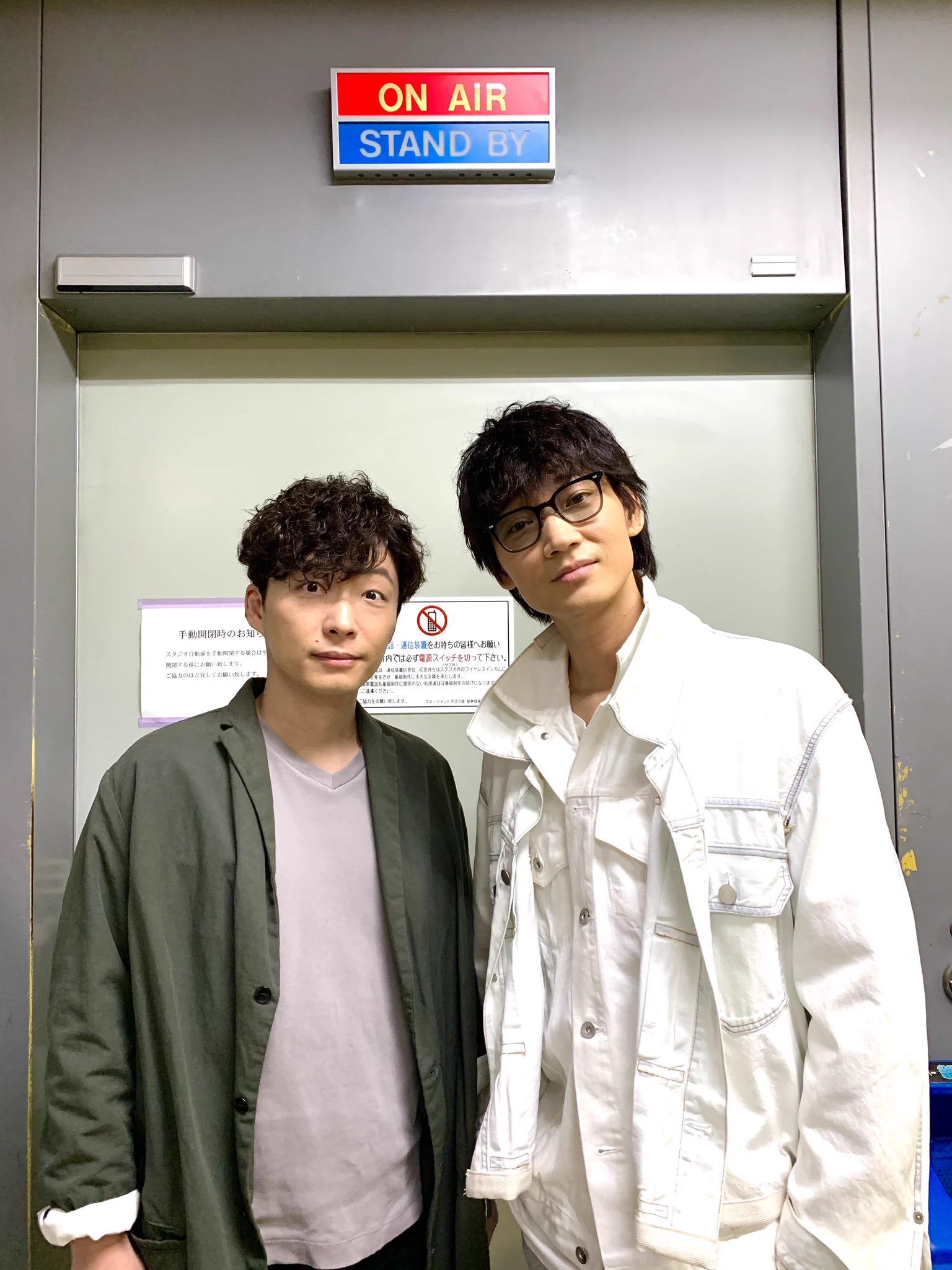
For those who discovered 7285 through celebrity sightings, the 319 is likely one of the first models that comes to mind.
It is known as the model worn by the character Ibuki Ai, played by Go Ayano, in the 2020 drama "MIU404." The eyewear media outlet GLAFAS reported confirming the model number through interviews with relevant parties. The well-proportioned contour of the square Wellington left a strong impression even within the character's attire.
The interest in the 319 lies not only in its front shape but also in the area where the front and temples meet. According to official sources, the shapes of the hinges and flat washers were inspired by the zippers of vintage flight jackets. Using flat washers increases the surface area for handling force, contributing to the frame’s durability against loosening.
The square rivet decorations with rounded corners on the front are a perfect accent. Easy to match with clothing, yet containing clever details that can be appreciated up close—the 319 is a pair that makes that balance easy to understand.
Wearing info: GLAFAS "Drama 'MIU404' Go Ayano's glasses". Structure: Official 319. Please check the lens and color specifications for the individual product as they may differ from those in the show.
◎Representative Model 2 | 363 — The edgy black frame favored by Ichiro Yamaguchi


Ichiro Yamaguchi of the band Sakanaction, who possesses a unique aesthetic sense in both music and fashion, loves the black 363 as a personal item.
In FASHIONSNAP's "2025 Best Buy," it was introduced as a pair he acquired around the beginning of 2025, which has become his new go-to pair of sunglasses. Yamaguchi was drawn to the straight-stretching temples and the flat impression of the front. He chose a shape that doesn't change his impression too much even when his hair hangs over it, while still having a bit of unique character.
In the photos of him wearing them, the black frame adds a distinct outline to his eyes. Because his expression is visible through the light-colored lenses, the thick black frame does not look too heavy. That balance blends well with Yamaguchi's composed style.
The highlight of the 363 is that it retains sharp edges while giving the surface a beautiful luster. According to the brand, it is finished with hand-polishing by craftsmen that takes more than five times longer than standard frames. By polishing without rounding off the surfaces too much, a three-dimensional expression is created where the silhouette pops every time light hits it.
The original hinges feature 10K pins. Instead of adding large decorations, the presence is created through the finish of the black surface and the gleam of the tiny metal pins. The size is 47□24-145. Even as a black frame, like the 319, the 363 is a model through which one can feel the essence of 7285's craftsmanship via the beauty of its corners and planes.
Personal/Wearing info: FASHIONSNAP Ichiro Yamaguchi interview. Manufacturing/Materials/Size: Official 363.
More on Ichiro Yamaguchi's eyewear.
In addition to his personal 363, we introduce examples of him wearing the 756 and 1012, along with how to choose them, with photos.
◎Metal expression through the 197 | 1940s shape for the modern face
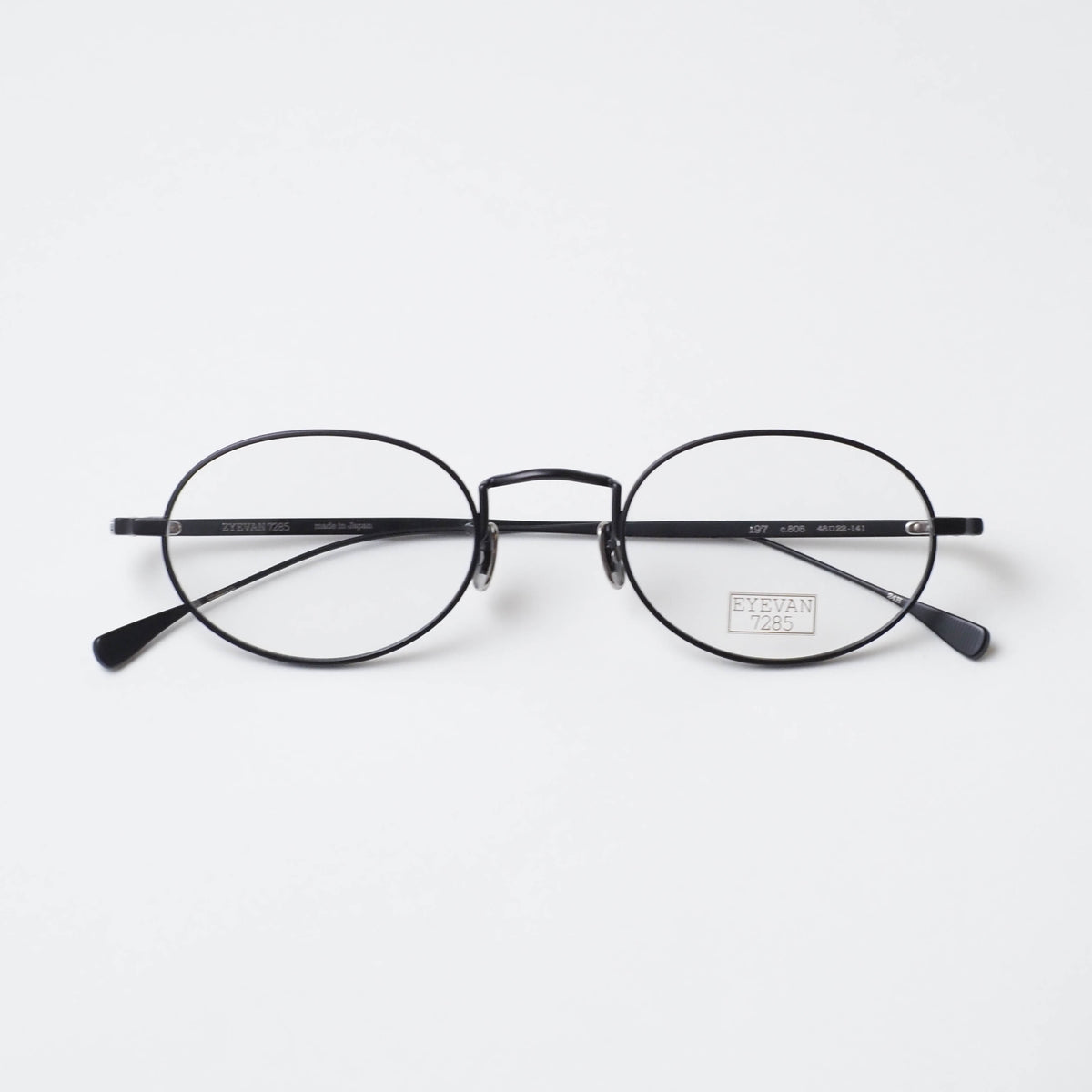
For those who have a strong impression of acetate frames, we highly recommend taking a look at the 197. Its horizontally long oval shape and arched bridge have a presence reminiscent of the 1990s to 2000s. On the other hand, according to official sources, the inspiration for its shape is a vintage frame from the 1940s.
Referencing a past era does not always align with how it looks today. The 197 demonstrates this intrigue well. By constructing the rim, lug, and temples with linear parts against curved lenses, a sharpened impression is added to the whole.
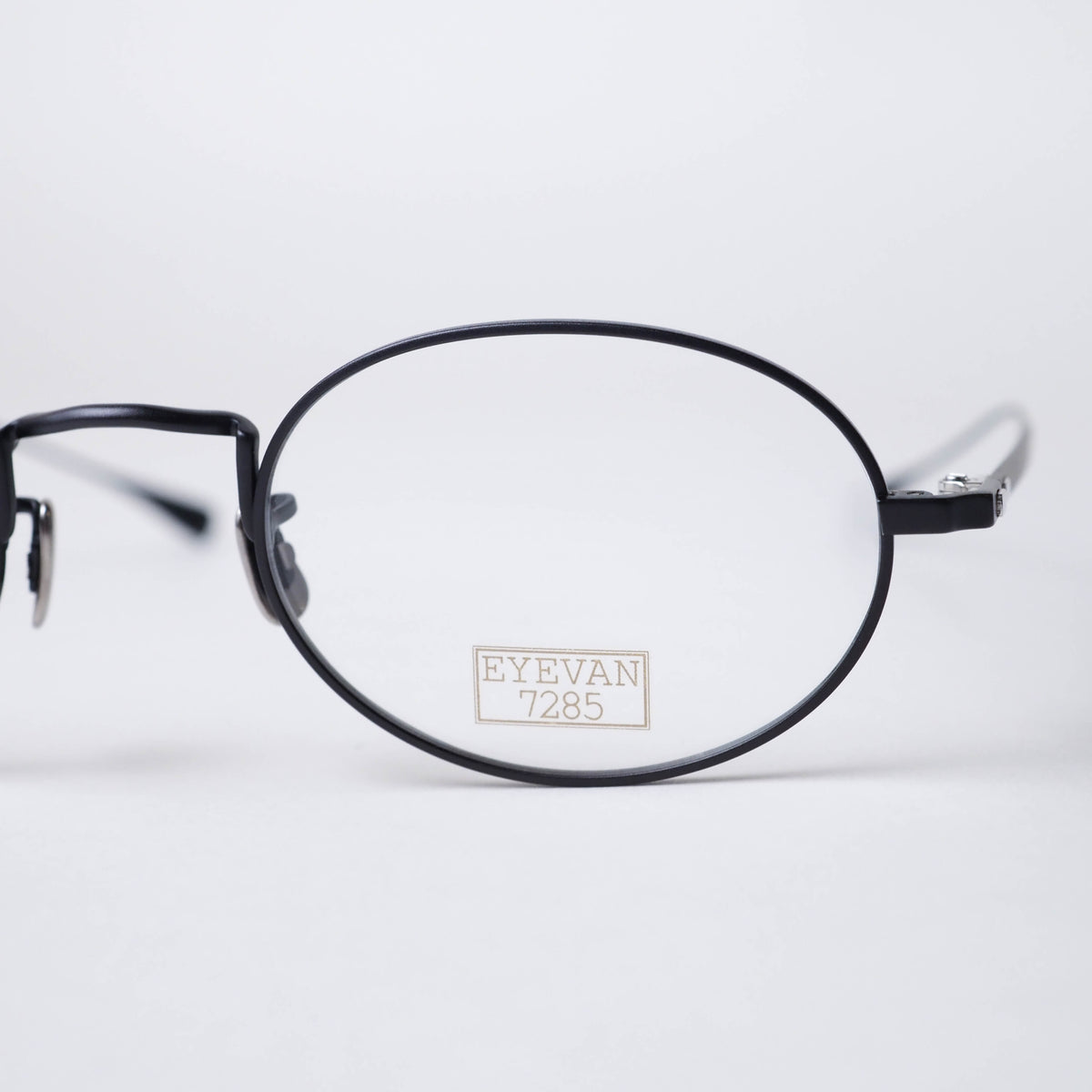
In the photos, pay attention to the difference between the thin contour surrounding the lens and the square joint extending to the side. The matte black of col.805 is a color where the outline and the shape of the parts are easy to compare because the color itself makes less of a statement.
The front is titanium, and the temples are beta-titanium. The size is 48□22-141. For those who prefer a delicate look but want to try a horizontally long balance slightly different from a round frame, this is a model to compare.
Reference: Official 197. The DOWNTOWN product featured is a clear lens version. Please view it as distinct from the sunglass specifications explained by the official brand.
◎Decoding the 376 through macro photography | Nose construction changes the expression

What kind of craftsmanship is the current 7285 working on? We’d like to introduce the 376 as a concrete example. The size is 44□25-145. It features a unique "changeable saddle bridge" at the nose of the acetate frame.
1 | Adding a mechanism to think about fit to the "ichiyama" aesthetic

What draws the eye in the photo is the metal part that forms an arc along the nose. "Ichiyama" is a style that supports the nose with a continuous piece instead of two separate nose pads. The 376 incorporates a part-selection mechanism into that classic style.
Officially, it is explained that by selecting and assembling bridges of different shapes, the "vertex distance"—the distance from the eye to the lens—can be adjusted to the wearer. Five types are prepared: three types are included, two types are optional. Please consult with the shop regarding selection and adjustment.
The acetate bridge seen from the front and the curve of the metal inside it. By layering these two shapes, depth is created at the bridge. The mechanism for wearing them has become a characteristic of their appearance.
2 | Seeing the relationship between parts and acetate from the inside

Next is where the front and temples meet. In the photo, you can see the sequence of the hinges, the "7285" engraving, and the thickness of the acetate surrounding them. The translucent col.150800 is a color that makes it easy to observe the metal inside, which is often hidden in darker acetate colors.
Even with the same frame, you see color and contour from the front, thickness from an angle, and construction from the inside. When choosing an acetate frame, if you think beyond just color to which angle you prefer, your way of comparing candidates will expand.
3 | Glass lenses designed alongside the frame
Japanese-made original flat glass lenses are adopted for the 376 sunglasses. Officially, the brand explains that they formulate the colors and mold the melted glass one piece at a time.
The flat lens surface combined with the rounded or thick frame. That combination is also an element that makes the 376's appearance. When wearing them, pay attention not only to the darkness of the lenses but also to the appearance of reflections and the position of the frame relative to your face.
Reference for mechanisms/accessories/materials: EYEVAN 7285 official 376. All photos are of products featured on DOWNTOWN. Bridge specifications are a description of this model and not common to all models.
◎Why are they called "Modern Crafts"? | Approximately 400 steps accumulated in Sabae
In official EYEVAN introductions, it is explained that the 7285 is created through approximately 400 steps, combining handwork by skilled craftsmen in Sabae with mechanical processing. The expression "Modern Crafts" is based on this manufacturing background.
There is no need to view this number as a simple scale to determine superiority over other brands. What to focus on is what those processes achieve. Shaping thin parts, finishing the surface of materials, combining multiple parts into a usable pair. Behind the shapes we’ve seen in macro photography lies that kind of processing.
The 319 hinge, the sharp edges and luster of the 363, the metal parts of the 197, the bridge of the 376. Each model has a different design, and the places you should check in photos change as well. To know the value of 7285, it is important not to stop at "because it is made in Japan," but to look into how the ingenuity for that particular pair has taken shape.
Process count/Manufacturing background: EYEVAN Inc. official brand introduction. Approximately 400 steps is the brand's explanation and does not individually indicate the process count for each listed model.
◎Knowing the history and looking at the details makes EYEVAN 7285 more interesting
The idea of "Wearable Glasses" that started in 1972. The global expansion of 1985. And in 2013, EYEVAN 7285 was born, inheriting that history.
The design team, led by Hirotaka Nakagawa, explores new possibilities in form and structure while learning from past glasses and tools. Sabae craftsmanship finishes those ideas into products meant to be worn daily.
Start with a shape that piques your interest. Then move on to the hinges, bridge, and polishing of the acetate. Being able to enjoy the time spent closely examining a single pair of glasses is the allure of choosing EYEVAN 7285.
View the EYEVAN 7285 product list
At DOWNTOWN, we introduce EYEVAN 7285 along with product photos that allow you to check everything from the overall silhouette to the details.